
Table of Contents
Both the ukulele and the guitar are string instruments. But they each have their own set of features. The number of strings, tuning arrangements, and size are just a few that set them apart.
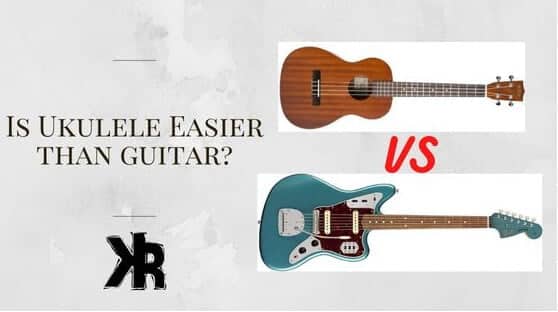
The ukulele is a small, four-stringed instrument, while the guitar has six and is much larger. So the question then becomes, is the ukulele easier than the guitar?
Yes, the ukulele is easier to learn and play than the guitar. First, there are fewer strings that are placed closer to each other, which makes them easier to press. This makes reaching notes less difficult. The ukulele is also easier to hold, which can be a hurdle when learning to play the guitar.
In this Killer Rig article, we are going to explore some of the reasons that make the ukulele an easier instrument to learn.
Even if you’ve never played it before. By the end of this article, you should know exactly why the ukulele is a great choice for beginners.
Is Ukulele Easier Than Guitar?
One of the main reasons the ukulele is easier than the guitar is the number of strings. The ukulele has four. While the guitar has six!
This can make a big difference when you’re trying to learn how to play chords and melodies. With fewer strings, it’s much easier to form chord shapes on a ukulele.
The ukulele is also a lot smaller than the guitar. This makes it much more comfortable to hold. Especially for beginners who are still getting used to holding an instrument.
The small size can also make it easier to carry around with you. This is great if you want to take your ukulele with you to practice away from home.
Another reason the ukulele is easier than the guitar is that they are tuned differently. Guitars are usually tuned in standard tuning, which can be confusing for beginners.
Ukuleles are often tuned in a variety of different ways. This provides more options for ease of use.
One of the most popular tunings for ukuleles is C6 tuning. This tuning uses the notes C, E, G, and A. This arrangement of notes is easier to work with for beginners. Since there are no sharps or flats. Playing chords on a ukulele then takes less effort as a result.
| Ukulele | Guitar |
|---|---|
| More Affordable | More Expensive |
| Portable | Less Portable |
| Soft Strings | Steel Strings |
| Easier to Play | More Complex to Play |
Reasons why the Ukulele is Easier Than Guitar
Here are a number of factors that make the Ukulele a much easier instrument when compared to the guitar.
1. Ukulele Has Fewer Frets
One of the things that can make the guitar difficult for beginners is the number of frets. The electric guitar has anywhere from 19 to 24 frets.
This can be overwhelming for someone who is just starting out. The ukulele typically has only 12 frets, and sometimes fewer.
This makes it much easier to find your way around the fretboard. And because the frets are also much closer together, there is no need to stretch your fingers to reach them. This means less strain on your wrist and your fingers when it comes to shaping chords.
Find all the different ukulele sizes here!
2. The Ukulele Strings are Softer
The ukulele is often seen as being an easier instrument to learn. This is because the strings are much softer and not as aggressive on the fingers.
If you have ever tried to play guitar, you will know that the strings can be quite tough on your fingers. This can make it quite difficult to get the hang of things.
With the ukulele, the strings are much softer and easier to press down. This makes it a lot easier for beginners to learn how to play. Instead of blistered fingers from steel strings, you may only have mild discomfort. But will still allow you to practice.
3. Sound Differences
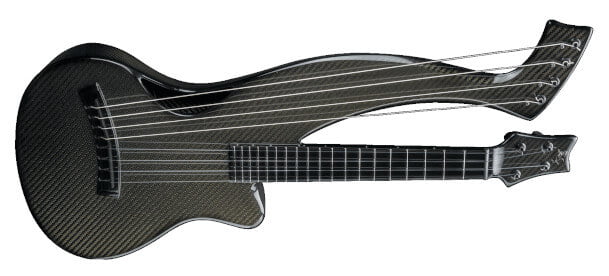
The ukulele and the guitar also have different sounds. The ukulele is mellow and softer, while the guitar can be quite loud. This can be a good or a bad thing depending on what you’re looking for.
If you’re trying to learn how to play in a band, the ukulele may not be the best for you. It can be drowned out by other instruments. Yet, if you’re looking for an instrument to play by yourself, the mellower sound of the ukulele can be quite nice.
It’s also important to consider the different types of ukuleles. Some come with built-in electronics. These can help amplify the sound to produce more volume.
This can make it more versatile, even for use in a band with other instruments. This will help prevent the sound from being drowned out.
Find out if you need a pick to play ukulele here!
4. Learning Materials
When it comes to wanting to play an instrument. One of the most important things is having access to good learning materials. When comparing these two instruments, the guitar definitely has an advantage.
There are a lot more resources available for learning how to play the guitar than there are for the ukulele. This is because the guitar is more popular. There are many companies and manufacturers producing learning materials.
Yet, this doesn’t mean that it’s impossible to find good learning materials for the ukulele. There are still plenty of books, online tutorials, and even apps that can help you learn how to play.
It might take a little while longer to find the right materials for your learning preference.
Can you play any song on the ukulele? Click here!
5. Chords are Easier
With a stringed instrument, the chord is very important. Chords are the building blocks of most songs. With the guitar, chords require stretching your fingers. They also require more strings to be pressed.
With the Ukulele, the strings and frets are closer together. Plus, there are less of them. This makes it easier to play chords.
Ultimately, you will then proceed to play songs much sooner. Not only does this make it easier, you are also encouraged sooner. Playing songs helps your desire to keep going.
6. Easier Tuning
Not only is tuning the ukulele easier, it’s also optimized for most songs. The uke uses re-entrant tuning.
This means they are not ordered from the lowest pitch to highest. It also means it’s easier to form chords and find melodies.
The use of open strings and less fretting is very beneficial. The demand to be overly technical is removed, this makes the ukulele much easier. The guitar on the other hand is not ordered this way. It’s an instrument that requires more technical fingering.
7. Physically Smaller
Another factor that is quite large, is the small size! Yes, the pun is intended! The ukulele is a lot smaller than the guitar.
This means it’s easier to hold in any position. The guitar requires proper balance. There is a learning curve that exists.
But with the ukulele, it can be held in any position, including standing up. It’s super light and easy to hold even with one hand! So there is no learning curve here. Not like there is with the guitar. You can pick it up and just play!
8. Less Financial Commitment
There is less of a financial commitment when learning the ukulele. You can get one for a couple of hundred dollars or less. This makes it easier to justify. A guitar is a larger investment. Sometimes they cost a lot to get started with.
Starting with the ukulele will also let you see if a stringed instrument is your thing. At least if it isn’t, you are not tying up a lot of money. This is another reason the uke is easier.
Which One Is Best For You?
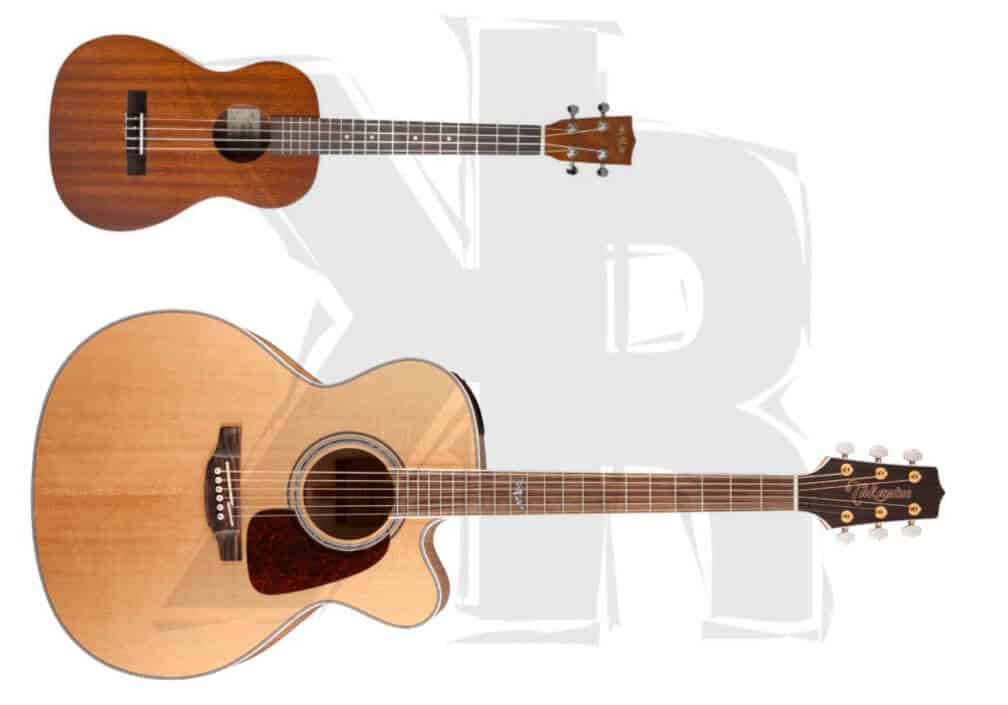
There are differences between the ukulele and the guitar, as you can see. By now, you may be wondering which one you should choose.
If you’re trying to decide between the two, it really depends on what you need.
If you want an instrument that is small and easy to carry around with you, the ukulele is a great choice. It’s also a good choice if you want an instrument that still has a balanced, rich tone and many variations.
The guitar is a better choice if you’re looking for an instrument that is louder and can be used in a band setting. Or even for a specific type of music. It’s also a good choice if you want an instrument with a wider range of notes and more versatility.
Conclusion
So, is the ukulele easier than the guitar? While it may be easier to learn the basics of the ukulele, both instruments have their own challenges. It really depends on what you’re looking for in an instrument.
In the end, you can learn to play both! Just decide on which one to start with based on your preferred music type and interests. It has to be fun, after all, or you may not keep trying to learn.
FAQs
Is playing ukulele like the guitar?
The two instruments are similar in some ways, but there are also some key differences. The ukulele has a different tuning arrangement. This means notes and chords will be different.
The addition of two extra strings on the guitar also makes it harder to play. But they are stringed instruments with similar body styles and designs. Learning one will help you with the other.
Can you play the ukulele in a band?
The ukulele can be played in a band, but it may get drowned if there are louder instruments as well.
This is because the ukulele has a softer, mellower sound. If you want to play in a band, you may want to consider an electric ukulele. It can be amplified to produce more volume.
Which is better for beginners, the ukulele or the guitar?
The ukulele is a great choice for beginners. This is because it is small, has fewer strings, and is generally easier to learn.
The guitar is a better choice if you already prefer the type of music you can play with one. However, both instruments can be learned by beginners with some practice.
