
Table of Contents
The iconic sound of Dimebag Darrell and Pantera is huge, stomping, and in your face. It’s the sound of a band that means business, and it’s all thanks to Darrell’s signature guitar tone.
Recreating the same tone can be tough if you don’t know what he used for equipment and how it was set.
So what was the secret to his sound? In this Killer Rig article, we’ll take a look at Dimebag Darrell amp settings and the gear he used to get his signature tone.
What Is Dimebag Darrell’s Sound?
Darrell’s sound is defined by its huge, full distortion and low end. It’s a thick, creamy tone that can cut through any mix like a hot knife through butter. His guitars are always in your face, no matter what the rest of the band is doing.
To get this sound, Darrell relied heavily on high-gain amps and distortion pedals. He was a big fan of Randall amps, and he used a variety of different models to get his signature sound.
He would often pair them with Boss distortion and overdrive pedals for even more gain.
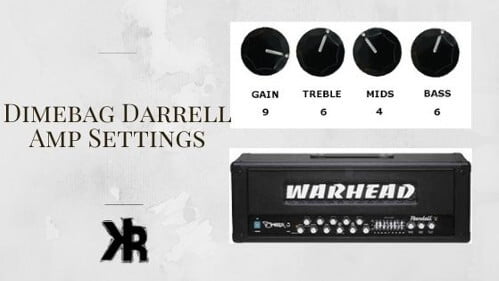
Some quick Dimebag Darrell amp settings are:
- Gain: 8
- Treble: 7
- Mids: 3
- Bass: 7-8
- Presence: 6-7
Darrell’s playing style was also a big part of his sound. He had a very aggressive picking attack that emphasized heavy low-end and high gain. This is evident in his roaring solos, which are known for their immense power and speed.
Get your Metallica amp settings here!
Dimebag Darrell Amp Settings
Now that you have the equipment you will need, it’s time to learn how to set it up to get this monstrous tone.
Gain Knob
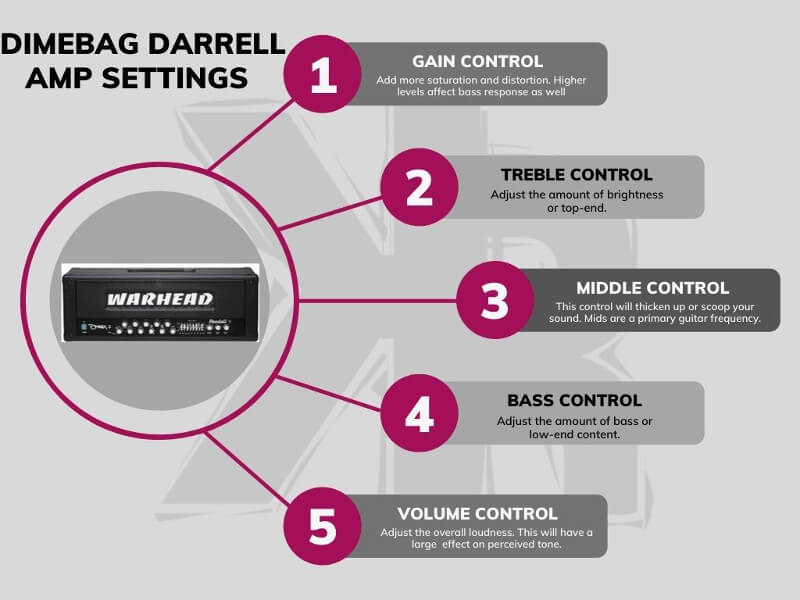
This is where the magic happens. This will give you a huge level of distortion and saturation. It will also help to thicken up your tone and make it more aggressive.
Some amplifiers may get too thick, where the bass just sounds muddy. If this is the case, back off the gain and try using a boost to tighten it up.
Dimebag Darrell used high-gain settings. But not at the expense of clarity, which is why he also added other gear to help him get his tone.
Sound like Rammstein with their amp settings here.
Equalization Controls
The EQ is very important when it comes to this sound. Begin with all control at the halfway setting. Then adjust them based on the presets we suggest throughout this guide.
- You will want your treble to be bright and biting without being harsh. Some guitars will need higher settings if they are quite warm.
- The mids control is set very low for Dimebag’s tone. The primary frequencies from a guitar are midrange. Dimebag scooped them. Meaning he lowered them to remain thick but acquire his signature tone.
- For a good bass setting, you want to retain clarity but create a thick, punchy sound. This can be done in conjunction with the gain control. They work together with low-end frequencies.
Any other control like presence or resonance should be set to halfway and adjusted after the main EQ. These control will enhance your base sound, so adjust them in small increments.
Popular Pantera Songs And Their Amp Settings
Once you see how the controls can enhance your tone. Then it’s time to start using them with some popular Pantera songs.
Walk
- Gain: 7-8
- Treble: 7
- Mids: 3-4
- Bass: 7-8
- Presence: 5-6
This song is one of Pantera’s most popular, and it features some of Dimebag’s best riffing. The opening riff is a perfect example of his use of the gain control to create a huge, saturated sound.
The guitars are very thick and chunky, with a lot of low-end. The midrange is scooped, but not to the point that it’s thin.
The treble is set high to give the guitars a biting edge that helps them cut through the mix. The bass is increased to help thicken up the sound and add some punch.
Check out our Motley Crue amp settings here!
Cowboys From Hell
- Gain: 8-9
- Treble: 7
- Mids: 4
- Bass: 7-8
- Presence: 6
- Depth: 6
The opening riff in this song is a perfect example of Dimebag’s signature tone. The gain is pushed hard, with the mids scooped out. But the guitars sound tight and aggressive.
The treble control is boosted for increased clarity, making each string stand out in the mix. This allows you to hear every nuance of his picking and strumming.
The bass control is increased to add some punch and a low-end thump. The depth control is also increased, which gives the guitars a fuller sound.
Cemetery Gates
- Gain: 8
- Treble: 8
- Mids: 3
- Bass: 7-8
- Presence: 6-7
This song has a more melodic feel to it, and the guitars feel even less mid-range focused. The gain is still high and pushed to the point of saturation.
The treble is increased for more clarity and definition. The mids are still quite low, which gives the guitars a bit of an aggressive edge and old-school tone.
The bass is increased to give the guitars a thicker and more powerful sound. While the presence control could be boosted for extra clarity at high volumes. The clean part in this song is also quite scooped and just needs to be bright.
What Gear Do You Need For A Dimebag Darrell Sound?
To get that thick, saturated Dimebag tone, you will want to have gear that is up to the task.
- Your guitar needs to have the right output and tone. The trick is to have high-output pickups made for metal music. A 6-string guitar will be perfect, but it needs to have humbucker pickups with some bite.
- Dimebag used solid-state Randall amplifiers. This sound can be recreated with many amps, but they must be good at this particular metal tone. The right amplifier will be heavily saturated. Also bright, and biting with a thick, scooped sound.
- Distortion and boost pedals will help a great deal. Dimebag used them to push his amps harder and get more distortion. It helped them stay tighter, yet super thick. An EQ pedal can also be very helpful with this tone.
Tone Setting Tips
If you are experiencing difficulty with Dimebag’s tone, there are a few things that you can do to get closer.
- Your guitar choice is very important for this tone. Single coil pickups will not do well trying to recreate this sound.
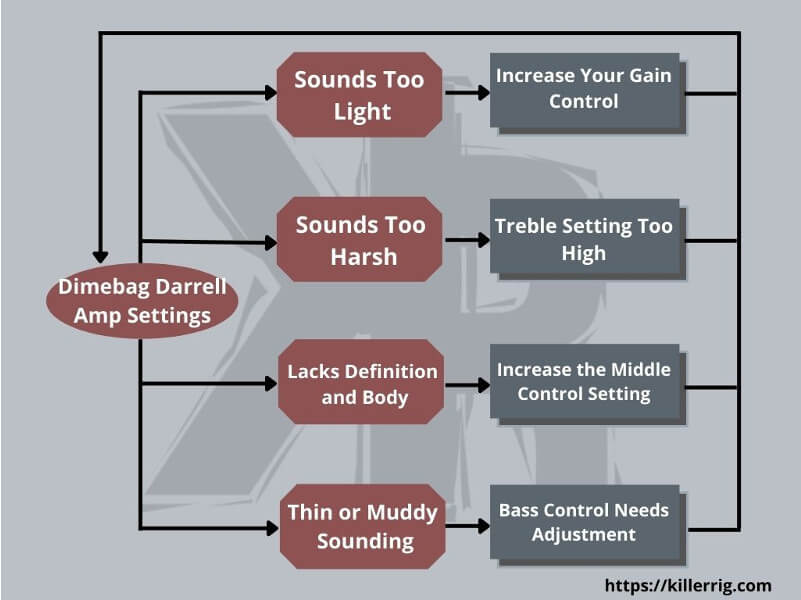
- If your tone is very thing, try turning down your treble control and add back some mids. You can also try using the guitar tone control knob to warm things up.
- If your bass is muddy sounding, try backing it down. If that doesn’t work, then the gain is too high. Back it down and replace it with midrange and bass.
- Consider a distortion pedal or boost for your amplifier. If you just can’t quite get the level of saturation you need, this can help a great deal.
- While there are many tuning arrangements that can work, try to use standard more often for this tone.
Looking to learn more about metal amp settings?
Conclusion
Dimebag Darrell’s tone is one of the most iconic in metal history. By understanding how he achieved it, you can begin to recreate it yourself.
Start with a high-gain amplifier and use the EQ controls to shape your sound. A good guitar with humbucker pickups will also be necessary.
With some practice, you should be able to achieve a tone that is close to Dimebag’s. And with a little tweaking, you can get it sounding even closer. Keep trying new things and enjoy the process!
FAQs
What amps did Dimebag Darrell use?
Dimebag Darrell used Randall solid-state amplifiers for his main sound. Occasionally he would also be seen using Peavey, Krank, and Marshall amp heads. Some of which used tubes.
What guitars did Dimebag Darrell use?
Dimebag Darrell was most commonly seen using Dean ML and Razorback-style electric guitars. He also had a signature model with Washburn.
